
Blending Perspectives from Every Continent
“Volatility has become so extreme that suppliers are quoting prices valid for only an hour,” says Fahd Chinoy, CEO of Pakistan Cables, in an exclusive interview with Dawn last Friday.
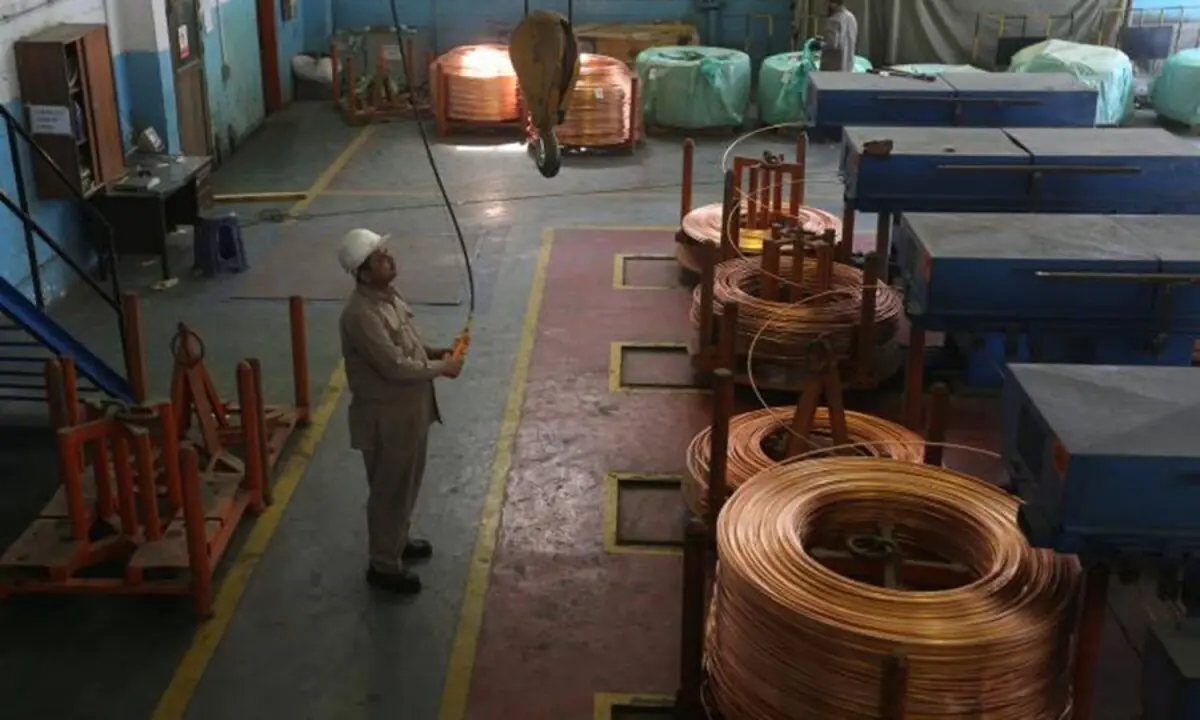
Constituting about 60 to 80 per cent of the cost of wire and cables, copper is an essential imported input. In the last six months, copper prices have surged from around $10,000 per tonne to over $13,000 by the time markets closed on March 6, according to the London Metal Exchange.
While international copper prices may eventually fall due to potential global demand destruction and recessionary pressures, Pakistan Cables’ immediate challenge lies in its supply chains. The conversation carried a sense of déjà vu from the pandemic years, when companies were forced to rethink logistics and sourcing strategies.
Just before the interview, Mr Chinoy’s team discovered that some shipments of raw materials might already be delayed because of the war. In an industry that traditionally runs on tight inventories to control working capital costs, such disruptions create immediate strategic dilemmas.
“Do we start building inventory?” he asks rhetorically. “Is everyone going to rush to stockpile raw materials?”
Even before the latest conflict, the global transition to electrification was increasing copper demand since renewable energy systems, electric vehicles, and data centres all require vast quantities of copper wiring.
Beyond copper, aluminium is a very important metal in the cables industry, and the Gulf Cooperation Council countries are important players. Bahrain’s Aluminium Bahrain (Alba) and the UAE’s Emirates Global Aluminium (EGA) provide nearly 9pc of the world’s primary metal.
However, the US’s attack on Iran has made sourcing aluminium logistically very challenging. With the Strait of Hormuz effectively a “no-go” zone for many shippers, aluminium prices have already decoupled from historical norms, recently climbing past $3,400 per ton, their highest level in nearly four years after Alba halted shipments.
Often sitting between 2pc and 4pc, margins in the cable industry are razor-thin. With her metal prices and supply disruptions, the final cost of a finished cable could rise sharply.
Investments in hard times
In one of the company’s most ambitious undertakings since its founding, Pakistan Cables recently shifted its entire manufacturing operation from its original Karachi site to a bigger new facility in Nooriabad. The move involved relocating dozens of machines while keeping production running and customers supplied, a logistical feat that required careful coordination and significant financial investment.
The new plant, built on a much larger site, integrates multiple stages of cable production into one location, incorporates modern equipment designed to improve efficiency and quality, and is the only one of its kind in Pakistan, says Mr Chinoy.
“It was a huge project,” he recalls. “We had to shift machinery while continuing to meet customer demand. But now that everything is consolidated, our operations are much smoother.”
The expansion came at a difficult time. The company had started investing heavily just as the pandemic disrupted global commerce and Pakistan’s economic crisis pushed interest rates sharply higher. Borrowing costs soared while supply chains became increasingly unpredictable.
Weathering the difficult times, the company was poised for better times ahead. Mr Chinoy expected that, without the war, the country would have been on a path to growth within 18 to 24 months.
“Hypothetically, if Pakistan were to see 5pc GDP growth, that could translate into 10pc growth in construction, which for us could mean 30pc to 40pc growth in volumes,” he says.
Future-proofing the company, Mr Chinoy says Pakistan Cables remains committed to expanding capacity to capture that potential demand.
Demand drivers in crisis
Maintaining a positive outlook, Mr Chinoy says, there are opportunities in crisis.
Given how heavily dependent the business is on imports, opening letters of credit was a challenge during the 2022-2023 period when Pakistan was forced to impose administrative curbs to prevent dollars from leaving the country.
To access dollars for imports, a company needed to bring in dollars through exports. It is during this time that Mr Chinoy used the crisis to drive momentum towards exports. The small base effect, exports have grown roughly three times since then, Mr Chinoy estimates.
Despite the stagnant construction phase in recent years, the cable industry has had three demand drivers. Firstly, investments in electricity grids and solarisation. High electricity tariffs have driven consumers towards solar, which has become a significant tailwind for the cable industry, as about 10pc of the total value of any residential or industrial solar project is now comprised of specialised cabling for solar.
Secondly, the shift towards electric vehicles (EVs) has been a boon for the cable industry globally, as an average EV requires approximately four times as much copper as a conventional internal combustion vehicle due to its extensive wiring.
Thirdly, the massive global investment in data centres is creating a surge in demand for specialised cabling.
Way forward
Commenting on the way forward, Mr Chinoy was pragmatic. While the current geopolitical climate presents a “doomsday scenario” for global trade, the cable industry is no more vulnerable than any other sector reliant on heavy raw material imports, he said.
“We are uniquely positioned to weather this storm because we are fully vertically integrated across copper, aluminium, and PVC. This structure allows us to drive internal efficiencies that others simply cannot match,” he said optimistically.
Published in Dawn, The Business and Finance Weekly, March 9th, 2026

No comments yet. Be the first to comment!